
Mandarin learning guide
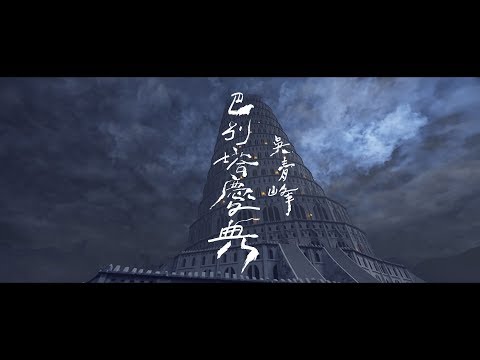
Learn with《巴別塔慶典》
This guide follows a lyric world where people talk past one another, repeat themselves, and wear masks. It is useful for learning negation, contrast, and a few vivid phrases about speech and misunderstanding.
What to listen for
The lyrics build a pointed picture of a place where communication fails: people speak, laugh, cry, pray, and still do not understand one another. Across the song, the language moves from describing one person’s hypocrisy to a wider scene of a “self-talking kingdom,” then to questions about identity, listening, and masks. This makes the song especially useful for noticing how Mandarin uses repetition, contrast words like 却, and fixed expressions that sharpen the feeling of distance between speech and meaning.
- Recognize how 却 marks a turn that contradicts the first clause.
- Understand several lyric phrases about speaking, hearing, and misunderstanding.
- Use the song’s question patterns to ask about identity, attention, and listening.
How the song moves
Opening portrait
The first lines describe one person through strange, critical images, building a contrast between surface behavior and hidden intent.
Core refrain
The repeated lines about speaking, crying, praying, and failing to communicate focus on collective misunderstanding.
World description
The “self-talking kingdom” section expands the scene into a place where nonsense becomes normal and listening stops.
Identity questions
The later lines ask when someone forgot their name, got trapped, or stopped listening, then end with the image of two selves wearing masks.
Translation choices
沟通无效 我 全都听不到
- Natural English
- Communication is useless; I can’t hear anything at all.
- Why
- This keeps the strong failure of 沟通无效 and the personal response 我 全都听不到. “Useless” is a natural way to show 无效 without over-translating.
这里是自说自话王国欢迎光临
- Natural English
- Welcome to the kingdom of talking to yourself.
- Why
- 自说自话 literally means speaking to oneself or talking past others, and “kingdom” matches 王国 while sounding natural in English.
两个自己戴上了面具
- Natural English
- Two selves put on masks.
- Why
- This preserves the compactness of 两个自己 and the clear action 戴上了面具, without adding extra interpretation.
Useful Mandarin from the song
This phrase is useful beyond the song for describing a gap between words or appearance and actual feeling or behavior.
A concise adjective used for methods, communication, or attempts that do not produce the intended result.
A common past-result expression that can be used for memory, names, tasks, or other things left behind.
This negative ability pattern is useful in everyday Mandarin when sound, speech, or information is not perceived.
Listen closely
- Listen for repeated contrast patterns such as 有说有笑,却… and 哭闹祈祷,却…; the second half sharply reverses the first.
- Notice how the refrain repeats 我 全都听不到 to underline total failure of communication.
- Track the shift from describing one person to describing a whole place, especially in 这里是自说自话王国 and 在这里胡言乱语才是正常事情.
Check your understanding
Which phrase in the song describes communication failing completely?
Show answer
沟通无效 / 我 全都听不到
What does the line 两个自己戴上了面具 suggest in simple Mandarin?
Show answer
A person has two sides, and both are hiding behind masks.