
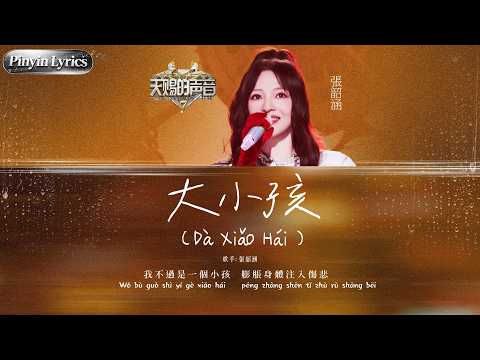
大小孩

Da Xiao Hai

长裤遮住摔破的腿
cháng kù zhē zhù shuāi pò de tuǐ
Pants cover the scraped legs.
求生的草将地面撞碎
qiú shēng de cǎo jiāng dì miàn zhuàng suì
The grass fighting for survival crashes onto the ground.
彼此的伤口在相对
bǐ cǐ de shāng kǒu zài xiāng duì
Our wounds are in opposition to each other.
掩饰著谁先哭的狼狈
yǎn shì zhù shuí xiān kū de láng bèi
Concealing who cried first in embarrassment.
曾经的疼了吹一吹
céng jīng de téng le chuī yī chuī
The pain from the past can be blown away.
那一缕风此刻在陪伴谁
nà yī lǚ fēng cǐ kè zài péi bàn shuí
That breeze is now accompanying someone.
雨中高举的小花伞
yǔ zhōng gāo jǔ de xiǎo huā sǎn
A small flower umbrella held high in the rain.
滚太多泥巴 洗不净的灰
gǔn tài duō ní bā xǐ bù jìng de huī
Rolled in too much mud, cleaned but unable to wash off the gray.
自己煮的粥不开花
zì jǐ zhǔ de zhōu bù kāi huā
The porridge I cook does not bloom.
是我不舍躲过的惩罚
shì wǒ bù shě duǒ guò de chéng fá
It is my reluctance that escapes punishment.
要心甘情愿的吞下
yào xīn gān qíng yuàn de tūn xià
Willingly swallowing this bowl of dialogue counts as having a response.
这碗对话才算有回答
zhè wǎn duì huà cái suàn yǒu huí dá
No need to ask about the heavy snowfall.
不用问漫天的大雪
bù yòng wèn màn tiān de dà xuě
You should know the way; I've lost a vibrant summer.
也知来路 我失去过盛夏
yě zhī lái lù wǒ shī qù guò shèng xià
These legs struggle with all their might.
这双腿用力的挣扎
zhè shuāng tuǐ yòng lì de zhēng zhá
Is it you that’s next to my heart?
陪在我心旁是不是你啊?
péi zài wǒ xīn páng shì bú shì nǐ a?
I don’t need to ask how beautiful the road ahead is.
我不用问前路有多美
wǒ bù yòng wèn qián lù yǒu duō měi
No matter how beautiful, it cannot escape regret.
无论有多美都无法不悔
wú lùn yǒu duō měi dōu wú fǎ bù huǐ
I won’t ask about every single tear.
我不再问每一滴眼泪
wǒ bù zài wèn měi yī dī yǎn lèi
Why each droplet is so precious?
到底为什么颗颗都珍贵
dào dǐ wèi shén me kē kē dōu zhēn guì
I’m just a child.
我不过是一个小孩
wǒ bù guò shì yí gè xiǎo hái
Inflating my body, filled with sorrow.
膨胀身体 注入伤悲
péng zhàng shēn tǐ zhù rù shāng bēi
I feel a bit of pain, but I won’t ask if enduring is right.
我有点疼 但我不再问忍著对不对
wǒ yǒu diǎn téng dàn wǒ bù zài wèn rěn zhù duì bú duì
I no longer ask where the one who can answer has gone.
我不再问能回答的人他去哪里了
wǒ bù zài wèn néng huí dá de rén tā qù nǎ lǐ le
I will no longer question right or wrong.
我不再问错与对
wǒ bù zài wèn cuò yǔ duì
Growing wings means soaring high.
生出翅膀就高飞
shēng chū chì bǎng jiù gāo fēi
I will overlook this cycle.
我将俯瞰这轮回
wǒ jiāng fǔ kàn zhè lún huí
I'll use death and fearlessness.
就用死亡和无畏
jiù yòng sǐ wáng hé wú wèi
I no longer want to wait for my turn.
不想再等著轮到我
bù xiǎng zài děng zhù lún dào wǒ
In a long queue just for landing.
排长长的队只为降落
pái zhǎng zhǎng de duì zhǐ wèi jiàng luò
In a long line, just to touch down.
出发的人总是焦灼
chū fā de rén zǒng shì jiāo zhuó
The ones who set off are always anxious.
也许到达的人才洒脱
yě xǔ dào dá de rén cái sǎ tuō
Perhaps only those who arrive can be carefree.
高原上稀薄的氧气
gāo yuán shàng xī bó de yǎng qì
The thin oxygen on the plateau.
开始教我没学过的呼吸
kāi shǐ jiào wǒ méi xué guò de hū xī
Begins to teach me a breathing I've never learned.
我的到达还有很远
wǒ de dào dá hái yǒu hěn yuǎn
My arrival is still far away.
在学著整理 学著减行李
zài xué zhù zhěng lǐ xué zhù jiǎn xíng lǐ
Learning to organize, learning to reduce baggage.
我不用问前路有多美
wǒ bù yòng wèn qián lù yǒu duō měi
No matter how beautiful, it cannot escape regret.
无论有多美都无法不悔
wú lùn yǒu duō měi dōu wú fǎ bù huǐ
I won’t ask about every single tear.
我不再问每一滴眼泪
wǒ bù zài wèn měi yī dī yǎn lèi
Why each droplet is so precious?
到底为什么颗颗都珍贵
dào dǐ wèi shén me kē kē dōu zhēn guì
I’m just a child.
我不过是一个小孩
wǒ bù guò shì yí gè xiǎo hái
Inflating my body, filled with sorrow.
膨胀身体 注入伤悲
péng zhàng shēn tǐ zhù rù shāng bēi
I feel a bit of pain, but I won’t ask if enduring is right.
我有点疼 但我不再问忍著对不对
wǒ yǒu diǎn téng dàn wǒ bù zài wèn rěn zhù duì bú duì
I no longer ask where the one who can answer has gone.
我不再问 风啊往哪里吹
wǒ bù zài wèn fēng a wǎng nǎ lǐ chuī
I no longer ask where the wind is blowing.
会在何处停下拥抱枯萎
huì zài hé chù tíng xià yōng bào kū wěi
Where will it pause to embrace withered things?
我仍是个小孩 缩著身体放肆喜悲
wǒ réng shì gè xiǎo hái suō zhù shēn tǐ fàng sì xǐ bēi
I am still a child, shrinking my body and indulging in joy and sorrow.
路是天空 人群是树林 我会穿过去
lù shì tiān kōng rén qún shì shù lín wǒ huì chuān guò qù
The road is the sky, the crowd is the forest, I will pass through.
无际的天 人群的缝隙 我望著自己
wú jì de tiān rén qún de fèng xì wǒ wàng zhù zì jǐ
Boundless sky, gaps in the crowd, I gaze at myself.

Mandarin learning guide

Learn with 大小孩

This guide follows the song’s plainspoken movement from hurt and concealment toward refusal to keep asking, then toward breathing, moving on, and still being “a child.” The lyrics stay close to the body and to difficult choices, so they work well for learning everyday grammar inside poetic lines.

emotional contrast, repeated sentence patterns, metaphor in simple Mandarin

What to listen for

The lyrics move through a series of grounded images and self-statements: covered legs, wounds facing each other, a cup of dialogue, heavy snow, a small child, wings, a queue, thin oxygen, and a crowd. Across the song, the speaker repeatedly says 不再问 to show a shift away from questioning, while still naming pain, uncertainty, and continued movement forward.

  • Recognize how 不再问 structures repeated refusals to keep questioning.
  • Understand how concrete nouns like 腿, 眼泪, 翅膀, and 行李 support abstract meaning.
  • Practice reading lyric metaphors without over-translating them into literal English.

How the song moves

Opening hurt and concealment

The first lines focus on injury, embarrassment, and covering up pain before the voice turns inward.

Refusal to keep asking

A cluster of lines repeats questions and then rejects them, especially with 不用问 and 不再问.

Movement and self-definition

Later lines shift to breathing, wings, travel, and the speaker naming themself as a 小孩 while still moving through the crowd.

Translation choices

长裤遮住摔破的腿

cháng kù zhē zhù shuāi pò de tuǐ

Natural English
Pants cover the scraped leg.
Why
This keeps the plain physical image and the idea of covering an injury. I use the singular 'leg' for a compact natural reading, even though the Chinese uses 腿.

要心甘情愿的吞下

yào xīn gān qíng yuàn de tūn xià

Natural English
Willingly swallowing it is the only way this conversation counts as an answer.
Why
The line combines 心甘情愿的吞下 with 这碗对话才算有回答, so the rendering keeps both the forced acceptance and the strange image of a 'bowl of conversation.'

我仍是个小孩 缩著身体放肆喜悲

wǒ réng shì gè xiǎo hái suō zhù shēn tǐ fàng sì xǐ bēi

Natural English
I’m still a child, shrinking in on myself and letting joy and sorrow spill out.
Why
This follows the contrast in 我仍是个小孩 with 缩著身体 and 放肆喜悲, preserving the tension between vulnerability and emotional excess.

Useful Mandarin from the song

遮住zhē zhùto cover, hide, or shield

遮住 is useful for describing physical covering and can also apply to hiding feelings or information.

帽子遮住了他的眼睛。mào zi zhē zhù le tā de yǎn jīng。The hat covered his eyes.
不舍bù shěreluctant to let go

Here it describes unwillingness that leads to avoiding punishment. In other contexts, it often describes not wanting to part with something.

她对旧房子很不舍。tā duì jiù fáng zi hěn bù shě。She finds it hard to part with the old house.
不再问bù zài wènno longer ask

This is a clear repeated pattern in the song. 不再 marks a change from continued questioning to stopping it.

我不再问原因了。wǒ bù zài wèn yuán yīn le。I no longer ask for the reason.
整理zhěng lǐto organize, tidy, or sort out

In the lyric it appears with 学著, showing a learning process. The verb works both for physical objects and for abstract life matters.

我在整理行李。wǒ zài zhěng lǐ xíng lǐ。I’m packing and organizing my luggage.

Listen closely

  • Notice how the repeated 不再问 lines change the emotional direction from questioning to acceptance.
  • Listen for the contrast between concrete images like 行李 and more abstract ideas like 轮回 and 无畏.
  • Track how the song returns to 我不过是一个小孩 / 我仍是个小孩 to keep the speaker’s self-view in focus.

Check your understanding

  1. Which repeated phrase shows the speaker stopping a habit of questioning?

    Show answer

    不再问

  2. In 学著整理 学著减行李, what two actions is the speaker learning?

    Show answer

    To organize and to reduce baggage.

Lyrics and song titles remain the property of their respective copyright holders. Pinyin annotations, English translations and editorial language notes are provided for educational and reference purposes. Rights holders may contact us through our DMCA page.