
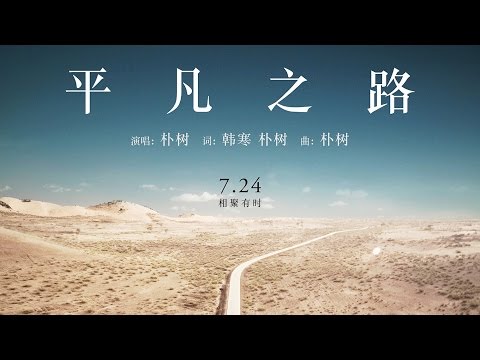
Mandarin learning guide
Learn with 平凡之路
This guide follows a lyric voice that moves from uncertainty to acceptance, using plain but layered Mandarin. You’ll practice how the song speaks about motion, loss, and “ordinary” life with clear, reusable phrases.
What to listen for
The lyrics move in a clear arc: questions and hesitation at the start, a long stretch of personal memory and loss, then repeated calls to keep moving forward and accept that the ordinary path is the one to take. The language is direct but expressive, with repeated structures like 我曾经 and 向前走 that make the emotional progression easy to track while teaching useful Mandarin patterns.
- Recognize how repeated structures build emphasis in a lyric.
- Understand how the song uses direction words to show movement and choice.
- Learn key phrases for describing loss, uncertainty, and acceptance.
How the song moves
Opening questions
The first lines ask whether the listener will leave or go, while describing a silent, mysterious story that is being heard—or not heard.
Memory of struggle
Several lines look back on past experiences: crossing mountains and seas, losing what was owned, and falling into darkness.
Turning point
The lyric states that seeing the ordinary is the only answer, shifting from confusion to a grounded conclusion.
Refrain of moving forward
Repeated lines urge continuing forward no matter what is gained, lost, or missed, ending with the image of the only road that must be taken.
Translation choices
徘徊着的 在路上的 你要走吗 via via
- Natural English
- Wandering along the road, are you going to go? via via
- Why
- This keeps the question form and the sense of being on the road. “Wandering along the road” fits 徘徊着的 在路上的 without adding a specific destination.
我曾经拥有着的一切 转眼都飘散如烟
- Natural English
- Everything I once had scattered like smoke in an instant.
- Why
- 转眼都飘散如烟 is an image of sudden disappearance. “Scattered like smoke” preserves the loss and the quickness implied by 转眼.
向前走 就这么走 就算你被给过什么
- Natural English
- Move forward, just keep going, even if you were given something.
- Why
- The repeated command 向前走 就这么走 is naturally rendered as an imperative. “Even if you were given something” stays close to the supplied wording without forcing a clearer object than the lyric provides.
Useful Mandarin from the song
This describes lingering movement or indecision. It works in both literal and emotional contexts.
This is a plain verb for losing something, here used with 所有方向 to show complete loss of direction.
This marks something as the single answer or choice. It is useful for strongly limiting options.
The phrase frames an outcome as something that seems beyond direct control. In the lyric it introduces the road as destined or unavoidable.
Listen closely
- Notice how several lines repeat 我曾经 to shift into memory and past experience.
- Listen for the repeated 向前走 line: the repetition turns a simple phrase into a strong refrain.
- Pay attention to the contrast between concrete images like 山和大海 and abstract words like 方向, 答案, and 平凡.
Check your understanding
Which line shows the shift toward acceptance by stating that the ordinary is the answer?
Show answer
直到看见平凡 才是唯一的答案
What does 向前走 suggest in the refrain?
Show answer
It suggests continuing forward and not stopping, even when circumstances are uncertain.