
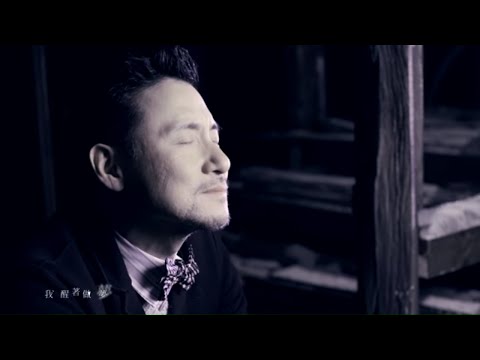
我醒著做梦 (Wake Up Dreaming)

Wo Xing Zhu Zuo Meng

看你熟睡时的笑容 以为爱很单纯
kàn nǐ shú shuì shí de xiào róng yǐ wéi ài hěn dān chún
Seeing your smiling face while you sleep, I thought love was simple.
以为就凭那些浪漫傻事 过一生也够用
yǐ wéi jiù píng nà xiē làng màn shǎ shì guò yī shēng yě gòu yòng
I thought that with those romantic silly things, it would be enough to last a lifetime.
可现实像闹钟 吵醒了同床的异梦
kě xiàn shí xiàng nào zhōng chǎo xǐng le tóng chuáng de yì mèng
But reality is like an alarm clock, waking me from a dream beside you.
我醒著做梦 就是痛也痛得感动
wǒ xǐng zhe zuò mèng jiù shì tòng yě tòng dé gǎn dòng
I am awake but dreaming, feeling pain that is touching.
誓言像梦话 那就留在梦里背诵
shì yán xiàng mèng huà nà jiù liú zài mèng lǐ bèi sòng
If promises are just dream talk, then let them stay in dreams to recite.
只有在梦中 哪怕喊破喉咙
zhǐ yǒu zài mèng zhōng nǎ pà hǎn pò hóu lóng
Only in dreams, even if I scream until my throat breaks.
说你永远是原来的你
shuō nǐ yǒng yuǎn shì yuán lái de nǐ
To say you are always the same you.
你无动于衷
nǐ wú dòng yú zhōng
You are indifferent.
以为两个人的天空 雨过后就有彩虹
yǐ wéi liǎng gè rén de tiān kōng yǔ guò hòu jiù yǒu cǎi hóng
I thought that in our sky for two, there would be a rainbow after the rain.
以为世界围绕我俩转动 在爱里没有惶恐
yǐ wéi shì jiè wéi rào wǒ liǎ zhuǎn dòng zài ài lǐ méi yǒu huáng kǒng
I thought the world revolved around us, and in love there was no fear.
我装得那么像 只希望时间会宽容
wǒ zhuāng dé nà me xiàng zhǐ xī wàng shí jiān huì kuān róng
I pretended so well, just hoping time would be forgiving.
就是做梦我也不相信
jiù shì zuò mèng wǒ yě bù xiāng xìn
Even in dreaming, I still don't believe.
在烈日当空 所有感情会无影无踪
zài liè rì dāng kōng suǒ yǒu gǎn qíng huì wú yǐng wú zōng
Under the blazing sun, all feelings will vanish without a trace.
我醒著做梦 就是痛也痛得懵懂
wǒ xǐng zhe zuò mèng jiù shì tòng yě tòng dé měng dǒng
I am awake but dreaming, feeling pain that is naive.
誓言像梦话 那就留在梦里背诵
shì yán xiàng mèng huà nà jiù liú zài mèng lǐ bèi sòng
If promises are just dream talk, then let them stay in dreams to recite.
只有在梦中 哪怕喊破喉咙
zhǐ yǒu zài mèng zhōng nǎ pà hǎn pò hóu lóng
Only in dreams, even if I scream until my throat breaks.
说我永远是原来的我
shuō wǒ yǒng yuǎn shì yuán lái de wǒ
To say I am always the same me.
我醒著做梦
wǒ xǐng zhe zuò mèng
I am awake but dreaming.
我醒著做梦
wǒ xǐng zhe zuò mèng
I am awake but dreaming.

Mandarin learning guide

Learn with 我醒著做夢

This guide follows the song’s contrast between remembered hope, harsh reality, and the repeated phrase 我醒著做夢. You’ll practice how the lyrics use dream language, contrast words, and repeated structure to express a conflicted state.

dream vs. reality vocabulary; contrast and consequence expressions; key repeated line patterns

What to listen for

The lyrics move from an early belief that love is simple to a later recognition that reality interrupts that belief. Across the verses, the song repeats dream imagery, especially 我醒著做夢, while pairing it with harder words like 现实, 闹钟, and 无动于衷. This makes the text useful for learning how Mandarin builds emotional contrast with everyday words and repeated sentence frames.

  • Recognize how the lyrics contrast imagined hope with现实
  • Understand the repeated phrase 我醒著做梦 in context
  • Notice how 把 ideas like promises and feelings are placed in dream-related phrasing

How the song moves

Opening memory

The first lines look back on a belief that love was simple and that romantic gestures would be enough.

Reality interrupts

The lyrics then turn to 现实像闹钟 and the repeated 我醒著做梦, showing the shift from hope to painful awareness.

Dream-only repetition

Later lines repeat 梦里、梦中 and end with the same refrain, reinforcing that some things can only be said in dreams.

Translation choices

可现实像闹钟 吵醒了同床的异梦

kě xiàn shí xiàng nào zhōng chǎo xǐng le tóng chuáng de yì mèng

Natural English
But reality is like an alarm clock, waking me from a shared dream.
Why
This keeps the comparison in 像 and the abrupt wake-up image from 闹钟, while reflecting the idea of 同床的异梦 as a dream shared beside someone rather than a literal bed image.

誓言像梦话 那就留在梦里背诵

shì yán xiàng mèng huà nà jiù liú zài mèng lǐ bèi sòng

Natural English
If promises are like sleep-talk, then let them stay in dreams.
Why
誓言像梦话 makes promises sound like words spoken in a dream; leaving them in dreams matches 留在梦里. The rendering stays close without overexplaining the metaphor.

我醒著做梦 就是痛也痛得懵懂

wǒ xǐng zhe zuò mèng jiù shì tòng yě tòng dé měng dǒng

Natural English
I am awake but dreaming, feeling pain that is still confused.
Why
我醒著做梦 is the central refrain. 痛也痛得懵懂 suggests pain that is not fully clear or settled, so “confused” fits better than a stronger emotional claim.

Useful Mandarin from the song

现实xiàn shíreality

现实 often marks the practical or actual situation, especially when it clashes with expectations.

现实很冷静。xiàn shí hěn lěng jìng。Reality is very calm.
留在liú zàistay in; remain in

留在 introduces where something is kept or left, and here it links the image of dreams to the act of leaving words there.

把问题留在明天。bǎ wèn tí liú zài míng tiān。Leave the problem for tomorrow.
宽容kuān róngforgiving; tolerant

宽容 can describe a person or, as here, time itself being expected to ‘forgive’ or allow space.

他对别人很宽容。tā duì bié rén hěn kuān róng。He is very forgiving toward others.
原来的yuán lái deoriginal; former

原来的 points back to an earlier, unchanged state or version, here used with 你/我 to mean ‘the same old you/me.’

我还是原来的想法。wǒ hái shì yuán lái de xiǎng fǎ。I still have the same original idea.

Listen closely

  • Listen for the repeated refrain 我醒著做夢; it returns as a summary line and also as a variation with different endings.
  • Notice how 以为 appears twice near the start, making the opening feel reflective and self-correcting.
  • Pay attention to the shift from soft dream words like 梦里 and 梦中 to sharper words like 闹钟 and 无动于衷.

Check your understanding

  1. In L0003, what does 现实像闹钟 suggest?

    Show answer

    It suggests reality suddenly wakes the speaker from the dream-like state.

  2. Which line uses 宽容, and what is it hoping for?

    Show answer

    L0011 uses 宽容; it hopes time will be forgiving.

Lyrics and song titles remain the property of their respective copyright holders. Pinyin annotations, English translations and editorial language notes are provided for educational and reference purposes. Rights holders may contact us through our DMCA page.