
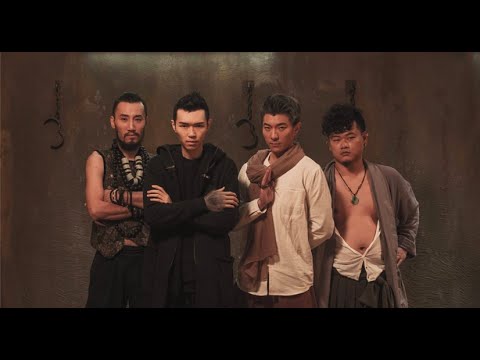
悟空 (Wukong)

Wu Kong

我是谁
wǒ shì shuí
Who am I?
记得当年大闹天宫还用说
jì de dāng nián dà nào tiān gōng hái yòng shuō
I remember when I caused a ruckus in Heaven.
我喝醉
wǒ hē zuì
I've gotten drunk.
犯了每个规条从不会改过
fàn le měi gè guī tiáo cóng bù huì gǎi guò
I’ve broken every rule but never changed.
双眼里只有自己
shuāng yǎn lǐ zhǐ yǒu zì jǐ
In my eyes, there's only myself.
有些恶意
yǒu xiē è yì
There’s some malice.
有些暴力
yǒu xiē bào lì
There’s some violence.
有点着急
yǒu diǎn zháo jí
I’m a bit anxious.
惹了报应
rě le bào yìng
I've invited retribution.
如来随意把我压进五指山下后
rú lái suí yì bǎ wǒ yā jìn wǔ zhǐ shān xià hòu
After the Buddha casually pressed me down under the Five Finger Mountain.
现在我有一千年修炼
xiàn zài wǒ yǒu yī qiān nián xiū liàn
Now I have a thousand years of cultivation.
别想破我的阵七十二变
bié xiǎng pò wǒ de zhèn qī shí èr biàn
Don't think you can break my formation; I have the seventy-two transformations.
什么凡人或灵魂或妖孽
shén me fán rén huò líng hún huò yāo niè
Whether mortal, spirit, or demon.
不要阻止我看守着师父他的命
bú yào zǔ zhǐ wǒ kàn shǒu zhe shī fù tā de mìng
Don’t stop me from guarding my master’s life.
我有一千年修炼
wǒ yǒu yī qiān nián xiū liàn
I have a thousand years of cultivation.
别想破我的阵七十二变
bié xiǎng pò wǒ de zhèn qī shí èr biàn
Don't think you can break my formation; I have the seventy-two transformations.
什么凡人或灵魂或妖孽
shén me fán rén huò líng hún huò yāo niè
Whether mortal, spirit, or demon.
记得遇上我的时辰不要太得意
jì de yù shàng wǒ de shí chén bú yào tài dé yì
Remember not to be too proud when you meet me.
一路上无论何方妖魔出现都不怕
yī lù shàng wú lùn hé fāng yāo mó chū xiàn dōu bù pà
No matter where demonic creatures appear, I am not afraid.
别上当
bié shàng dàng
Don't be fooled.
聊斋每一回能背全都一样
liáo zhāi měi yī huí néng bèi quán dōu yī yàng
Each tale of Liaozhai can be memorized as they are all the same.
我脑海四根清净
wǒ nǎo hǎi sì gēn qīng jìng
My mind is clear with four states of tranquility.
有些正义
yǒu xiē zhèng yì
There’s some justice.
有些道理
yǒu xiē dào lǐ
There’s some reasoning.
有点义气
yǒu diǎn yì qì
I have a bit of loyalty.
没有忘记
méi yǒu wàng jì
I haven't forgotten.
我的教训让我看清应该怎么做
wǒ de jiào xùn ràng wǒ kàn qīng yīng gāi zěn me zuò
My lessons have shown me how I should act.
现在我有一千年修炼
xiàn zài wǒ yǒu yī qiān nián xiū liàn
Now I have a thousand years of cultivation.
别想破我的阵七十二变
bié xiǎng pò wǒ de zhèn qī shí èr biàn
Don't think you can break my formation; I have the seventy-two transformations.
什么凡人或灵魂或妖孽
shén me fán rén huò líng hún huò yāo niè
Whether mortal, spirit, or demon.
不要阻止我看守着师父他的命
bú yào zǔ zhǐ wǒ kàn shǒu zhe shī fù tā de mìng
Don’t stop me from guarding my master’s life.
我有一千年修炼
wǒ yǒu yī qiān nián xiū liàn
I have a thousand years of cultivation.
别想破我的阵七十二变
bié xiǎng pò wǒ de zhèn qī shí èr biàn
Don't think you can break my formation; I have the seventy-two transformations.
什么凡人或灵魂或妖孽
shén me fán rén huò líng hún huò yāo niè
Whether mortal, spirit, or demon.
记得遇上我的时辰不要太得意
jì de yù shàng wǒ de shí chén bú yào tài dé yì
Remember not to be too proud when you meet me.
西游记每一集都看过
xī yóu jì měi yī jí dōu kàn guò
I've watched every episode of Journey to the West.
每一部都很不错
měi yī bù dōu hěn bú cuò
Each one is quite good.
特别是周星驰和莫文蔚
tè bié shì zhōu xīng chí hé mò wén wèi
Especially Stephen Chow and Karen Mok.
谁和谁
shuí hé shuí
Who and whom...
都曾经演过的
dōu céng jīng yǎn guò de
...have both acted in it?
就是喜剧那幕
jiù shì xǐ jù nà mù
That comedy scene.
就是那么幽默
jiù shì nà me yōu mò
It's just so humorous.
还有一个牛魔等着唐僧路过
hái yǒu yí gè niú mó děng zhe táng sēng lù guò
There's also a Bull Demon waiting for Tang Seng to pass by.
我们的主角英雄还没料到自己姓孙
wǒ men de zhǔ jué yīng xióng hái méi liào dào zì jǐ xìng sūn
Our hero protagonist hasn't realized he is surnamed Sun.
他有些私人问题而且还未找到自尊
tā yǒu xiē sī rén wèn tí ér qiě hái wèi zhǎo dào zì zūn
He has some personal issues and hasn't found his self-esteem yet.
无问题
wú wèn tí
No problem.
他一定会找到一个月光宝盒
tā yí dìng huì zhǎo dào yí gè yuè guāng bǎo hé
He will definitely find a Moonlight Treasure Box.
然后回到过去
rán hòu huí dào guò qù
And then return to the past.
就像杰伦八度空间的歌
jiù xiàng jié lún bā dù kōng jiān de gē
Just like Jay Chou's song from the album 'Eight Dimensions.'
From which ever page you were on
This is a whole new chapter
See I once was a king
Now I serve my master
My master is a master of self
He taught me how to master myself
My master is the servant of people
Seeks to give strength to the feeble
It's gonna be a long long journey
But I'll protect him from evil
Someday we'll find the wisdom
One day we'll carry the light
When we return to the kingdom
Thеn we can end the fight
Thеn all the people will know
After laying eyes on the scroll
Then all the people will know
Journey
Journey
Journey
Journey
Journey

Mandarin learning guide

Learn with “悟空”

This guide follows the lyric voice as it moves from self-questioning to a stronger sense of duty and discipline. The song mixes mythic references, reflection, and warning language in compact Mandarin phrases.

self-reference and stance; rule-breaking and correction; mythic vocabulary in context

What to listen for

The lyrics use a first-person voice to question identity, recall past wrongdoing, and then describe a change in outlook through cultivation, discipline, and responsibility. Along the way, the song uses myth-related terms such as 天宫, 五指山, 七十二变, and 师父, plus practical expressions like 有点、不要、没有忘记, making it useful for studying how Mandarin builds meaning through short clauses and repeated contrasts.

  • Understand how the lyric shifts from self-focus to responsibility.
  • Recognize key myth-related nouns and fixed phrases in context.
  • Learn how negative commands and contrasting clauses are formed in short lyric lines.

How the song moves

Opening self-question and recall

The lyrics begin with a direct question about identity and then move into remembered events and self-description.

Wrongdoing, consequence, and restraint

The next lines describe rule-breaking, punishment, and a shift toward control and discipline.

Duty and warning

Later lines emphasize guarding the master, not forgetting lessons, and warning others not to be arrogant or fooled.

Translation choices

我是谁

wǒ shì shuí

Natural English
Who am I?
Why
A short direct question is the most natural English equivalent and preserves the lyric’s abrupt opening tone.

别想破我的阵七十二变

bié xiǎng pò wǒ de zhèn qī shí èr biàn

Natural English
Don’t think you can break my formation; I have the seventy-two transformations.
Why
This keeps the two-part structure: a warning not to break the defense/array, followed by the named ability. “Formation” fits 阵 here better than a generic “array” in natural English.

不要阻止我看守着师父他的命

bú yào zǔ zhǐ wǒ kàn shǒu zhe shī fù tā de mìng

Natural English
Don’t stop me from guarding my master’s life.
Why
The line centers on preventing interruption, with 看守着 marking an ongoing action. “My master’s life” matches 师父他的命 without adding extra detail.

Useful Mandarin from the song

从不会cóng bù huìnever; from the start not ever

This phrase strengthens the negative claim and sounds more forceful than a simple 不会. It often appears before a verb to show a habit or pattern that has never changed.

他从不会迟到。tā cóng bù huì chí dào。He is never late.
有点yǒu diǎna little; somewhat

This softens the description and is useful for expressing a small degree of a feeling or state.

我今天有点累。wǒ jīn tiān yǒu diǎn lèi。I’m a little tired today.
不要bú yàodon’t; do not

A direct negative command used to warn or prohibit. In this lyric it helps create a firm warning tone.

不要说话。bú yào shuō huà。Don’t talk.
应该yīng gāishould; ought to

This marks judgment or advice about the proper way to act. Here it connects the lesson learned with correct behavior.

你应该早点休息。nǐ yīng gāi zǎo diǎn xiū xī。You should rest earlier.

Listen closely

  • Notice how repeated lines such as 现在我有一千年修炼 and 别想破我的阵七十二变 reinforce the speaker’s resolve.
  • Listen for contrast between self-critical lines like 我喝醉 and stronger, disciplined lines like 我的教训让我看清应该怎么做.
  • Pay attention to the warning pattern with 不要 and 别, which gives several lines a direct, guarded tone.

Check your understanding

  1. Which line shows a direct self-question, and what is its natural English meaning?

    Show answer

    L0001, 我是谁 — “Who am I?”

  2. Which phrase in the lyric expresses a small degree of a feeling, and what does it mean?

    Show answer

    有点 — “a little” or “somewhat”.

Lyrics and song titles remain the property of their respective copyright holders. Pinyin annotations, English translations and editorial language notes are provided for educational and reference purposes. Rights holders may contact us through our DMCA page.