
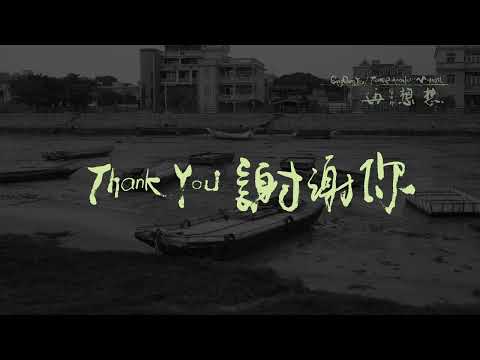
Mandarin learning guide
Learn with 謝謝你
This guide follows the song’s repeated “谢谢你” and the striking images around it. We’ll focus on how the lyrics build requests, contrasts, and abstract noun phrases in Mandarin.
What to listen for
The lyrics move through a series of unusual requests and vivid statements, returning several times to “谢谢你” as a refrain. Across the song, you can study modal expressions like “我需要” and “我要,” contrastive timing with “之前” and “之际,” and literary combinations such as “泯去恩仇” and “目之所及,” all in lines that stay closely tied to the repeated thank-you structure.
- Recognize how the song repeats “谢谢你” as a structural anchor.
- Understand several literary or formal phrases used in the lyrics.
- Practice reading lines that combine ordinary grammar with unusual imagery.
How the song moves
Opening request and timing
The song begins with a need statement and a time limit: a boat is needed before the river freezes or melts, then the refrain appears.
Second request and social pairings
A larger need is stated, followed by paired images and the phrase about letting go of grievances, then a request for a storyteller.
Reflection and inner split
After another thank-you, the lyrics move to the clock, the absurd system, and paired lines about the left and right eyes.
Closing accumulation
The final section repeats the sunset, wound, and truth lines, ending with the wish that everything seen becomes you.
Translation choices
在河水结冰之前 或融化之际
- Natural English
- Before the river freezes or melts.
- Why
- This keeps the compact time-frame and the choice between two states. “之际” is rendered naturally as “before”/“at the time of,” but “Before” fits the line’s forward-looking setup with line 1.
为井底的青蛙 和相信自由的狗
- Natural English
- For the frog in the well and the dog that believes in freedom.
- Why
- This preserves the paired structure and the unusual contrast between the two nouns. “为” here works well as “for,” marking purpose or address rather than a simple object.
我只要目之所及 都具体成你
- Natural English
- I just want everything I see to become you.
- Why
- “具体成” is rendered as a result of turning into something concrete or specific. “Become you” stays close to the line’s direct second-person target without adding extra emotion.
Useful Mandarin from the song
A direct, useful pattern for stating a need or requirement. It is simple and flexible in everyday Mandarin.
Used to mark that one event happens earlier than another. Here it sets a deadline before the river changes state.
A compact, formal phrase. In this lyric it names a deliberate clearing away of past hurt and conflict.
A literary expression that marks everything within one’s visual range. It is useful beyond this song in formal description.
Listen closely
- Listen for how “谢谢你” returns as a refrain after different image clusters.
- Notice the switch between “我需要” and “我要,” which slightly changes the feel of need versus desire.
- Pay attention to paired or parallel lines such as “左眼…右眼…” and the repeated two-part structure in the closing section.
Check your understanding
Which line uses “之前” to set a time limit before a change happens?
Show answer
在河水结冰之前 或融化之际。
What does “目之所及” mean in this lyric?
Show answer
It means everything within sight, or as far as the eye can see.